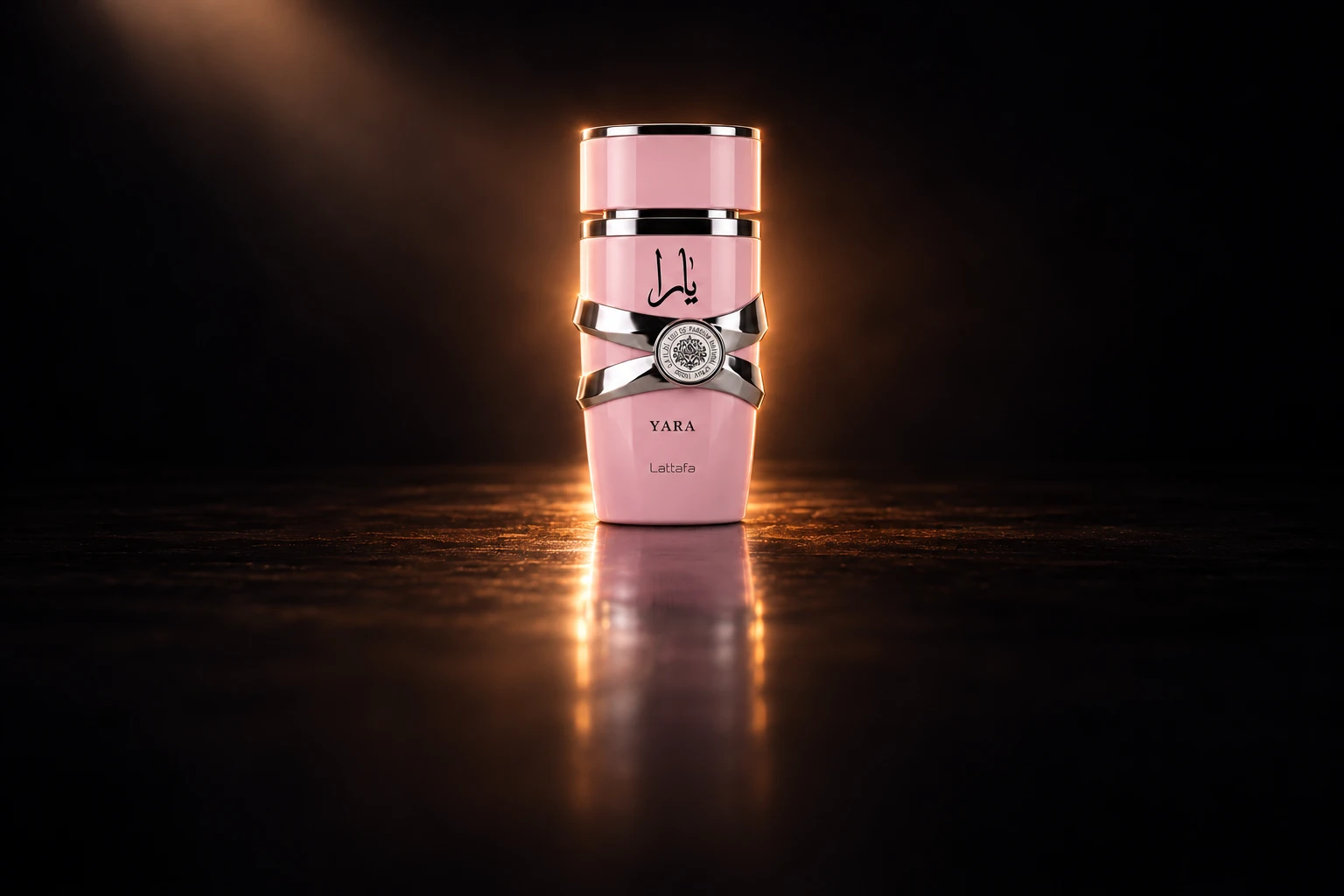
Yara by Lattafa
Raw casual shots of the Yara EDP redesigned into a scroll-stopping main image — shape clarity, lighting and CTR in an AI + Photoshop workflow.
Make your product the one they notice.
A restoration product whose listing never showed a restoration — rebuilt from four images into a full ten-slot set built around proof.
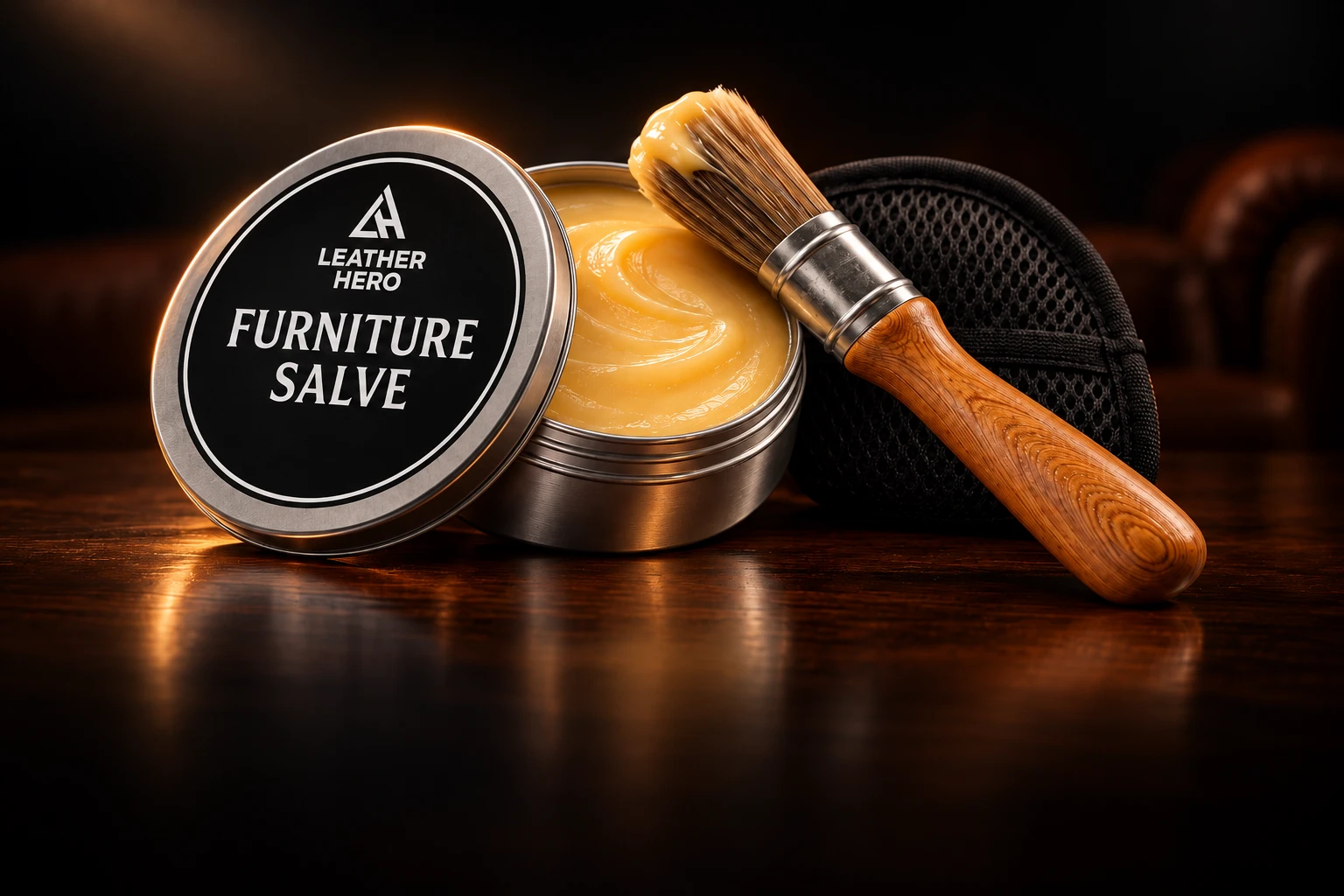
Leather Hero sells a restoration product. The only question in a buyer’s head is whether it will fix the sofa they’re looking at right now, and the listing never answered it. Four images, all of them claim, none of them evidence. In a category whose entire job is visible change, not one image showed a before and an after.
The second problem was visible from the search results page. All four images sat on the same dark brown gradient, so at thumbnail size they read as one image repeated four times — swiping through them revealed nothing new. Two of the four covered almost the same benefit list, spending a slot on a repeat instead of an objection. And with only four images live, slots that cost nothing to fill were sitting empty.
Nothing showed the product in a home. No sofa, no dining table, no cabinet — nothing that let a buyer look at the picture and see their own furniture in it. A shopper who can’t picture the product in their room doesn’t add it to cart. They keep scrolling.
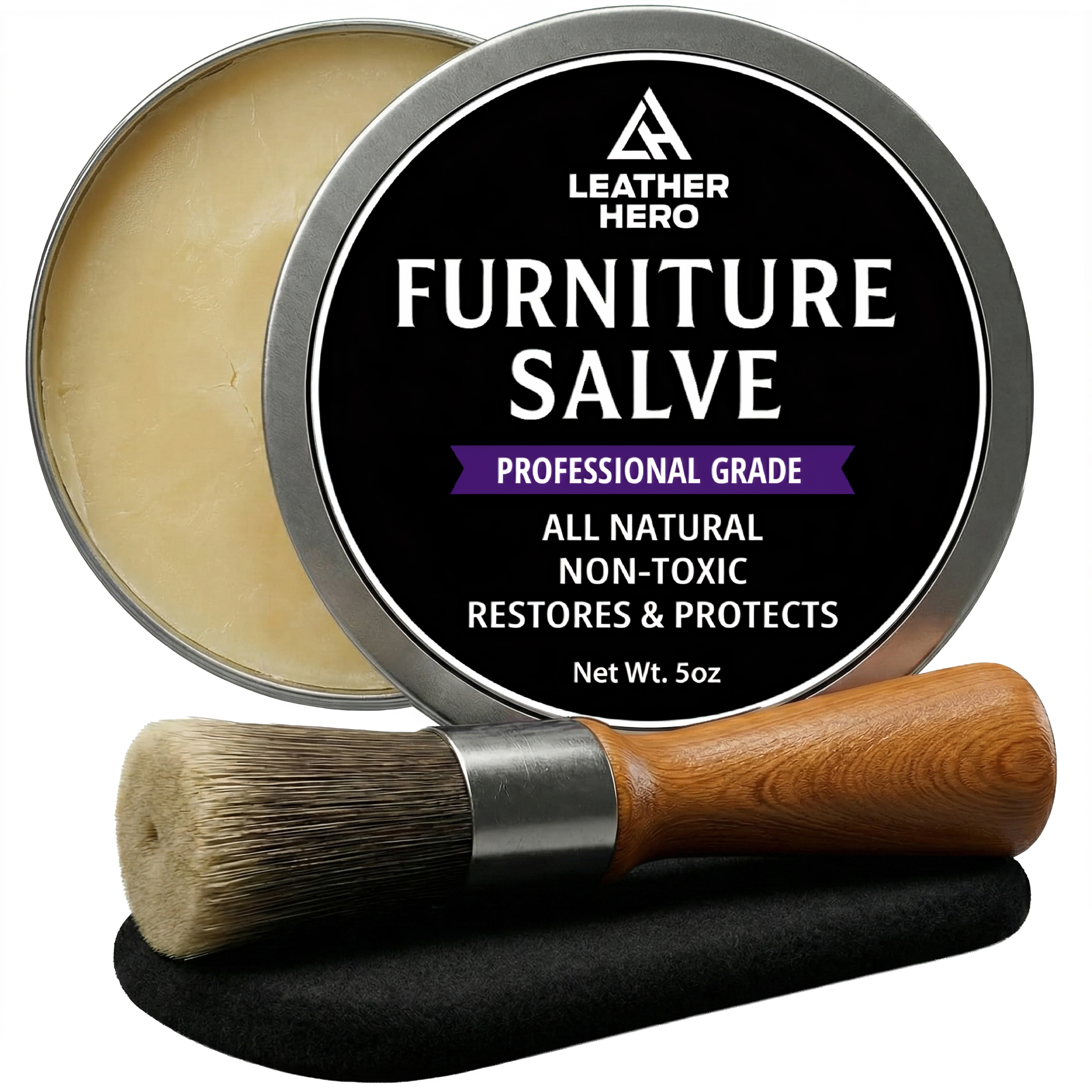
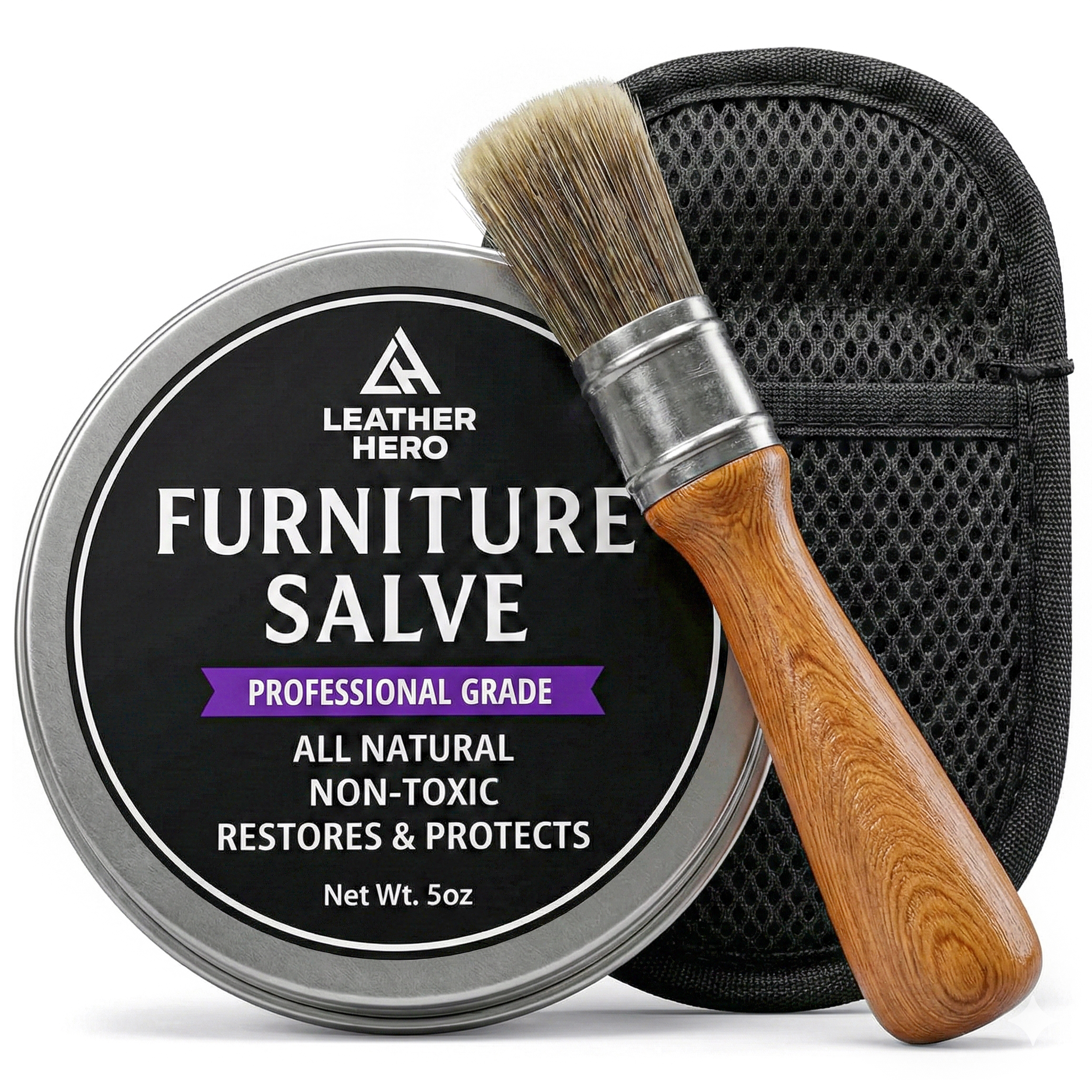
Same three pieces, same white background, same Amazon policy. What changes is legibility at thumbnail size — the tin face turned toward the camera, the brush lifted clear of the pad instead of crossing it, and the pad given its own silhouette rather than sitting flat behind everything else.
Added true before-and-after frames to the set. A scratched table top and a worn rail, framed identically on both sides of the divider, so the finish is the only thing that changes between them. The buyer stops reading a promise and starts judging a result — which is the decision they were trying to make anyway.
The flat brown gradients are gone. The tin now sits on a real dining table, beside a Chesterfield sofa, next to a leather handbag and kitchen cabinetry. Same product, but it’s furniture care happening in a house instead of a jar floating in a void — and every background is different enough that the thumbnails stop looking like one image.
“Deep conditioning” is a phrase every product in this category uses and every buyer skims. A cut-away magnifier shows the salve running down into the leather’s grain instead of sitting on top of it. The claim becomes something you can look at and check.
Every slot in a listing is a question the buyer has not asked out loud yet. Here is what each of the ten is for.
SLOT 1 — MAIN
Wins the click and nothing else. Pure white per Amazon policy, with the three kit pieces angled so the tin face, the brush and the pad all still read at thumbnail size. The buyer’s only job here is to recognise what it is and register that there’s more than one thing in the box.
SLOT 2 — WHAT IT DOES
Six benefits arranged around the open tin, so you can see the actual texture of the product while you read what it claims to do. The “3-in-1” headline carries the value argument this category is usually too shy to make: one purchase, three jobs.
SLOT 3 — DOES IT REALLY WORK?
The strongest asset in the set. Instead of repeating “deep conditioning,” the cut-away shows the salve moving down into the leather grain while the brush is still on the cushion. Turns an unverifiable adjective into a mechanism the buyer can inspect.
SLOT 4 — WHAT’S IN THE BOX
Kills the “do I need to buy a brush too?” hesitation before it forms. Naming the three pieces as text beside the image means the answer survives even when the image is viewed small.
SLOT 5 — PROOF, PART ONE
The image the original set never had. A scratched table top split down the middle — same light, same angle, finish the only variable. This is the frame where a claim becomes evidence.
SLOT 6 — PROOF, PART TWO
A second before-and-after, different object and different damage: dried-out wear rather than scratches. One proof frame can be luck. Two on different surfaces reads as a product that works.
SLOT 7 — WHERE ELSE CAN I USE IT?
Four rooms in one frame — leather sofa, dining table, handbag, cabinetry. Every extra surface raises what the same 5oz tin is worth, and one of those four panels is likely to be the exact thing the buyer was worried about.
SLOT 8 — IS IT SAFE ON MY FURNITURE?
Beeswax and oil shown as ingredients rather than described as them, plus the three exclusions buyers actually search for: no silicones, no toxins, no sticky residue. Answers “what will this do to my leather?” head-on.
SLOT 9 — THE ASPIRATION
No callouts, no icons — a restored Chesterfield in a room the buyer would like to own. After eight slots of argument, this one exists purely to let them picture the outcome in their own space.
SLOT 10 — HOW HARD IS THIS?
Apply, absorb, buff. Three panels, three verbs, real hands. Effort is the last objection standing by this point, and showing the whole job as three steps removes it.
Every leather conditioner on Amazon says “deep conditioning.” It’s on the tin, it’s in the bullets, it’s in the A+ content. Which means it has stopped being information and become noise — the buyer’s eye slides straight past it.
The claim isn’t the problem. The problem is that it describes something happening where nobody can see it. You cannot verify “deep” by looking at a jar of cream.
So I drew it. A magnified cut-away, set inside a full frame of the salve being brushed onto a leather cushion, showing the product travelling down between the fibres rather than pooling on the surface. The wider frame keeps it honest — this is the product being used, not a diagram in a vacuum — and the inset does the explaining.
It changes what the slot is for. Instead of asking a buyer to trust an adjective, it hands them a mechanism and lets them decide for themselves. That’s the line between an image that decorates a listing and an image that answers an objection — and answering objections is the only reason a listing image exists.
Traffic · 90 days after launch
Sales · 90 days after launch
Figures as reported by the brand, measured over the 90 days after the new image set went live.
Selling a restoration product?
The same treatment for your listing — proof over claims, objections answered slot by slot.
Raw casual shots of the Yara EDP redesigned into a scroll-stopping main image — shape clarity, lighting and CTR in an AI + Photoshop workflow.
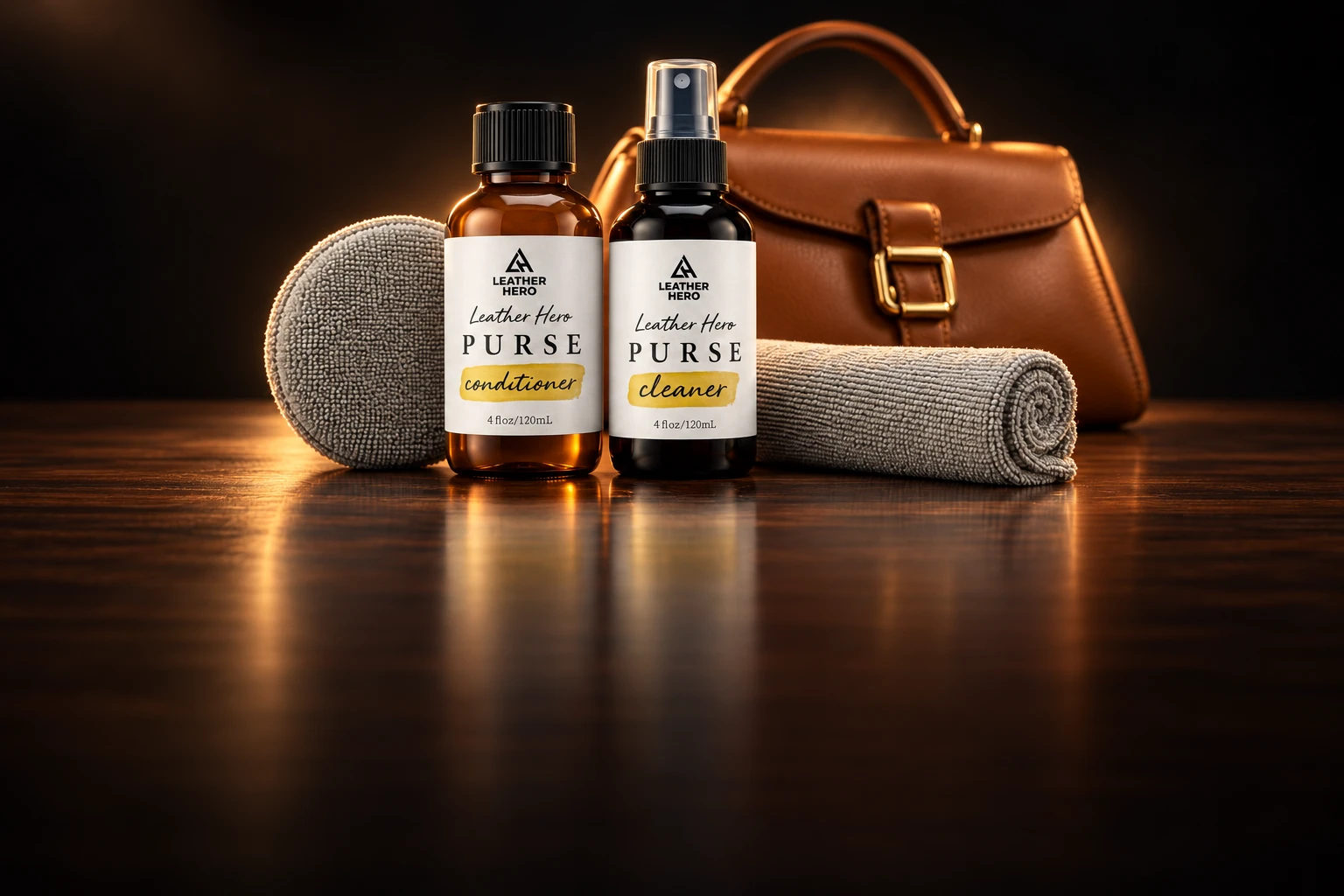
The brand's second product, given the same proof-first treatment: an eight-image set led by one aged crossbody, restored in a single split frame.
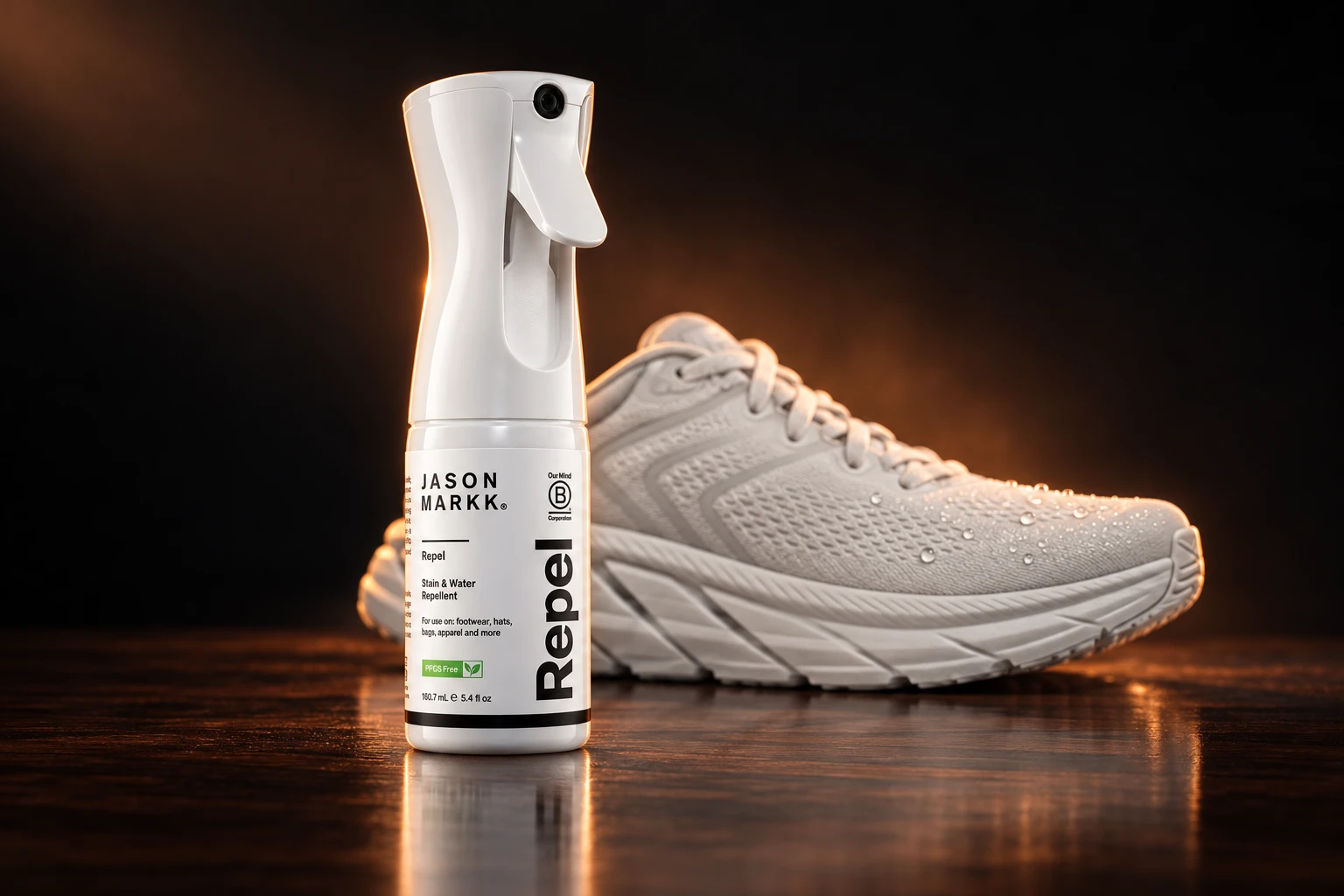
A clean white product shot turned into a lifestyle composite: an AI-generated sneaker set behind the spray, so the image shows the outcome, not just the bottle.
Thanks for reaching out — I'll get back to you within 24 hours.