Most of my work is for shoe care and leather care brands: polishes, creams, conditioners, cleaners, protector sprays, brushes and the kits that bundle them. It is a category with a specific problem. On an Amazon search page, almost every product in it looks the same. A tin is a tin. A bottle of conditioner is a bottle of conditioner. What the buyer actually wants to buy is not in the package at all. It is a result on their own boots, bag or sofa.
This guide is how I plan a shoe care listing from the main image to the A+ Content and the Brand Store. It is written for brand owners selling on Amazon.com, and it is the approach behind the listings in my portfolio for brands like Eagle Shoe Care, Leather Hero and Fiamme.
Why shoe care is a demonstration product
Some products sell on specifications: a charger has a wattage, a pan has a diameter. Shoe care sells on a visible change. Nobody buys a leather conditioner because of the bottle. They buy it because they believe the dry, faded leather in front of them will look like the rich, supple leather in the picture.
That changes the job of the image set. A specification product needs its features explained. A demonstration product needs its result shown, believably, and then needs to remove the doubts that stop a buyer acting on it. In shoe care those doubts are remarkably consistent:
- Will it work on my material? Smooth leather, suede, nubuck, patent and synthetic need different products, and buyers know it.
- Will it match my color? For polish and cream, a wrong shade is a ruined pair of shoes.
- What exactly is in the box? Kits are compared piece by piece.
- How do I use it? A product that looks complicated loses to one that looks simple.
- Is it safe? Buyers worry about darkening, stains and residue on expensive leather.
A good shoe care listing answers those five questions in order, in pictures, before the buyer has to read a bullet point.
The main image: show the product, hint at the use
The main image has the strictest rules on Amazon: a pure white background, the product filling around 85% of the frame, and no added text, badges or props that are not included. Inside those rules, there is still a lot of room to stand out from a row of closed tins.
- Open the container. A jar with the lid off shows the cream or wax itself. Texture and color tell the buyer what kind of product it is before they read the title.
- Show every included piece. If the brush and cloth come in the box, they belong in the main image. A visible bundle is the easiest reason to click your listing instead of a bare tin.
- Make the color readable at thumbnail size. If you sell shades, the label or the product itself has to communicate the color at the size of a search result.
- Check it on a phone. Most Amazon shoppers browse on mobile, where your main image is a small square among many.
I wrote about the most common failures in more detail in why leather product main images fail on Amazon.
The image sequence: proof first, features second
After the main image, the order of the images matters more than any single image. Buyers swipe quickly and many stop after a few. For a demonstration product, I put proof as early as possible and leave the detail for later slots.
A PROOF-FIRST SHOE CARE IMAGE SET
- 01WHAT’S IN THE BOXEvery piece named, nothing left to guess
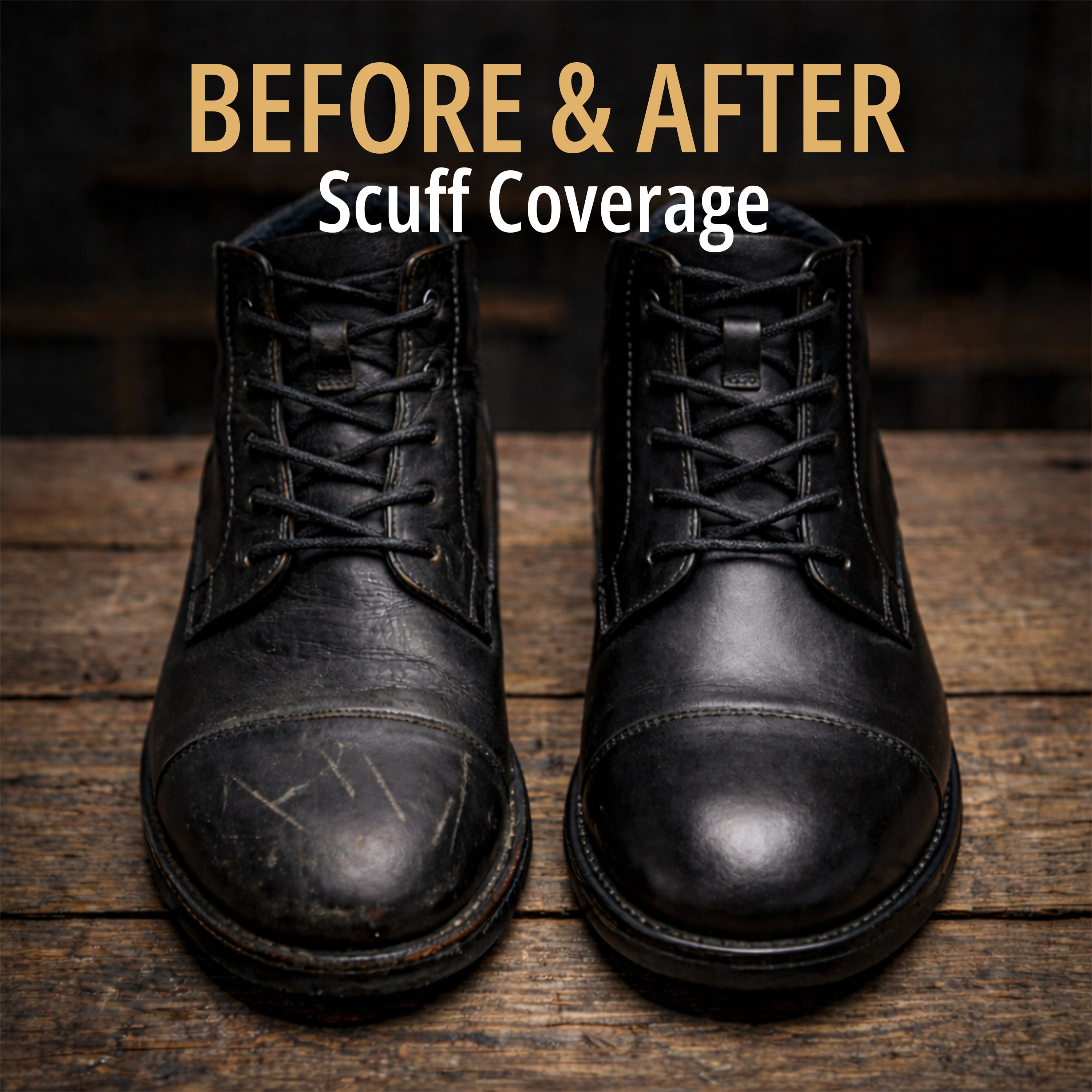
- 02BEFORE / AFTERThe result, shown on one item
- 03HOW TO USEThree or four simple steps
- 04WHICH MATERIALSWhat it is for, and what it is not
- 05BENEFITSIcons that read on a phone
- 06OTHER USESBags, jackets, belts, furniture
The before-and-after is the most persuasive image in this category and also the easiest to get wrong. It only works when the buyer believes it, so it has to show the same item, under the same light, from the same angle, with a realistic change. An after shot that looks like a different, brand-new shoe reads as a trick. A modest, honest improvement reads as proof.
The material slot is the one most listings skip, and it costs them. A suede buyer who cannot tell whether your product is safe for suede will simply buy one that says so. Show the materials it is for with real swatches or photographs, and say clearly what it is not for. That honesty reduces returns and negative reviews, and buyers trust it.
Color matching for polish and cream
If you sell a range of shades, color is the biggest worry in the listing. Screens vary, product photos are retouched, and buyers know a wrong shade cannot be undone. A few things help:
- Show the shade applied to real leather, not just the product in the tin. Cream looks darker in the jar than on a shoe.
- Keep the variation swatches consistent: same angle, same crop, same light, so the only difference between them is the color. The same principle applies to footwear variation swatches.
- Include a neutral option and explain when to use it. Many buyers who cannot find an exact match will choose neutral if you tell them it is safe.
Kits: make the bundle the hero
Shoe care kits compete on contents. A buyer comparing a five-piece kit with a seven-piece kit will count. Name every piece in a dedicated what’s-in-the-box image, then show the pieces working together in a step-by-step image so the kit reads as a complete routine rather than a pile of accessories.
Give any tool that is easy to undervalue, such as a horsehair brush or a buffing cloth, its own moment in the set. If it is in the box, it is part of the price, and the buyer should see why it is there.
TWO WAYS TO SHOW THE SAME KIT
Claims to handle carefully
Shoe care copy often drifts into claims that Amazon, or a skeptical buyer, will question. Words like waterproof, permanent, restores any leather, or safe on all materials are promises. Use only claims the brand can support, and show the condition beside the claim: water resistant after drying, for smooth leather only, test on a hidden area first. A small honest line next to a benefit is more persuasive than a large claim the buyer does not believe.
Amazon’s image rejections in this category usually come from the main image, not the claims, but the rules are worth knowing in full. My guide to why Amazon rejects product images covers the common ones.
A+ Content: answer the last doubts
A+ Content sits below the fold, where a buyer who is nearly convinced goes to check one last thing. For shoe care, I build it in the order those doubts usually arrive: what the product does, what is in the box, what it is made of, whether it works, and how to use it over time.
A+ MODULES FOR A SHOE CARE PRODUCT
The comparison chart is particularly useful for shoe care brands, because buyers often are not sure whether they need a cleaner, a conditioner or a cream. A chart that sorts your products by task and material keeps them inside your brand while they decide. Build a separate mobile layout too, since Amazon shows a different version on phones; the approach is covered in my A+ Content strategy guide.
Brand Stores for growing shoe care lines
Once a brand has more than a handful of products, the Brand Store becomes important. Shoe care catalogs grow by material and by color, and buyers shop that way too. Organize the store around how people decide: by leather type, by task (clean, condition, protect, shine) or by product family, and give each page a clear reason to exist. The Fiamme Brand Store is a good example of a store built around one material, suede and nubuck.
A checklist before you brief a designer
- Approved claims, ingredients and any test results.
- The materials it is for, and the materials it is not for.
- The full shade range, with physical samples if possible.
- Every kit component and what each one does.
- Any real before-and-after photography you own.
- The competitor listings you lose sales to.
If you want to see how this looks in a finished set, the Eagle shoe cream case study walks through a full ten-image listing slot by slot, and this pricing guide explains what each part of a listing costs.
Related Reading
- Leather Product Photography Optimization
- Amazon Infographic Design: 7 Best Practices
- Amazon Shoe Size Chart Images That Help Reduce Returns
Frequently Asked Questions
Why do shoe care products need a different listing approach from other products?
Shoe care is a demonstration product. A tin of cream or a bottle of conditioner looks like every other tin or bottle, and what the buyer is really paying for is the result on their leather. The image set has to show that result, explain which materials the product is for, and make kit contents obvious, which most generic listing templates do not do.
Can I use before-and-after images on a shoe care listing?
Not on the main image, which has to show the product on a pure white background. On secondary images and in A+ Content a before-and-after is usually the most persuasive slot, provided it shows a real result you can stand behind, uses the same item, light and angle on both sides, and does not imply a claim the product cannot support.
Should a shoe care brand with many products use a Brand Store?
Usually, yes. Shoe care catalogs grow by material and color, and a Brand Store lets you organize them the way buyers think: by leather type, by task (clean, condition, protect, shine) or by color. A good store also gives your advertising a destination that is not a single listing.
What should a shoe care brand send a listing designer?
The physical product or good photography of it, the approved claims and ingredients, the materials it is and is not suitable for, the full color range, kit contents, any real before-and-after photography, and the competitors you lose sales to. The clearer the material and claim information, the faster the image set can be planned.
Conclusion
A shoe care listing is not a set of pretty pictures of a tin. It is an argument that the buyer’s own leather will look better, made in the order the buyer’s doubts arrive: what is in the box, does it work, will it work on my material, how do I use it. Get that order right, keep every claim honest, and the listing does the selling before anyone reads a bullet point.